Heat Pumps on a Frosty Cambridge Morning — What Actually Happens
Last reviewed: 2 October 2026
Cambridge gets more frosty nights than most English cities. This guide follows a heat pump through a cold Cambridge morning hour by hour, then explains efficiency, defrosting and how to get through a cold snap comfortably.
Cambridge winters in numbers
Over 1991–2020, the Met Office station at NIAB on the north-west edge of Cambridge recorded:
- around 52 days of air frost a year, compared with about 33 at Filton near Bristol
- an average January overnight low of just under 2°C
- about 760 mm of rain a year, making Cambridge one of the driest places in England
So Cambridge winters are frostier than many, but also drier. Both matter for a heat pump.
A frosty morning, hour by hour
Imagine a clear January night in Chesterton. The temperature drops to −3°C by dawn.
Midnight. The heat pump is running steadily at low output, holding the house at a slightly reduced night-time temperature. Weather compensation has raised the radiator water temperature a few degrees because it’s colder outside.
3am. Frost is forming on the ground. The outdoor coil is colder than the air, so a thin layer of ice starts to build on its fins.
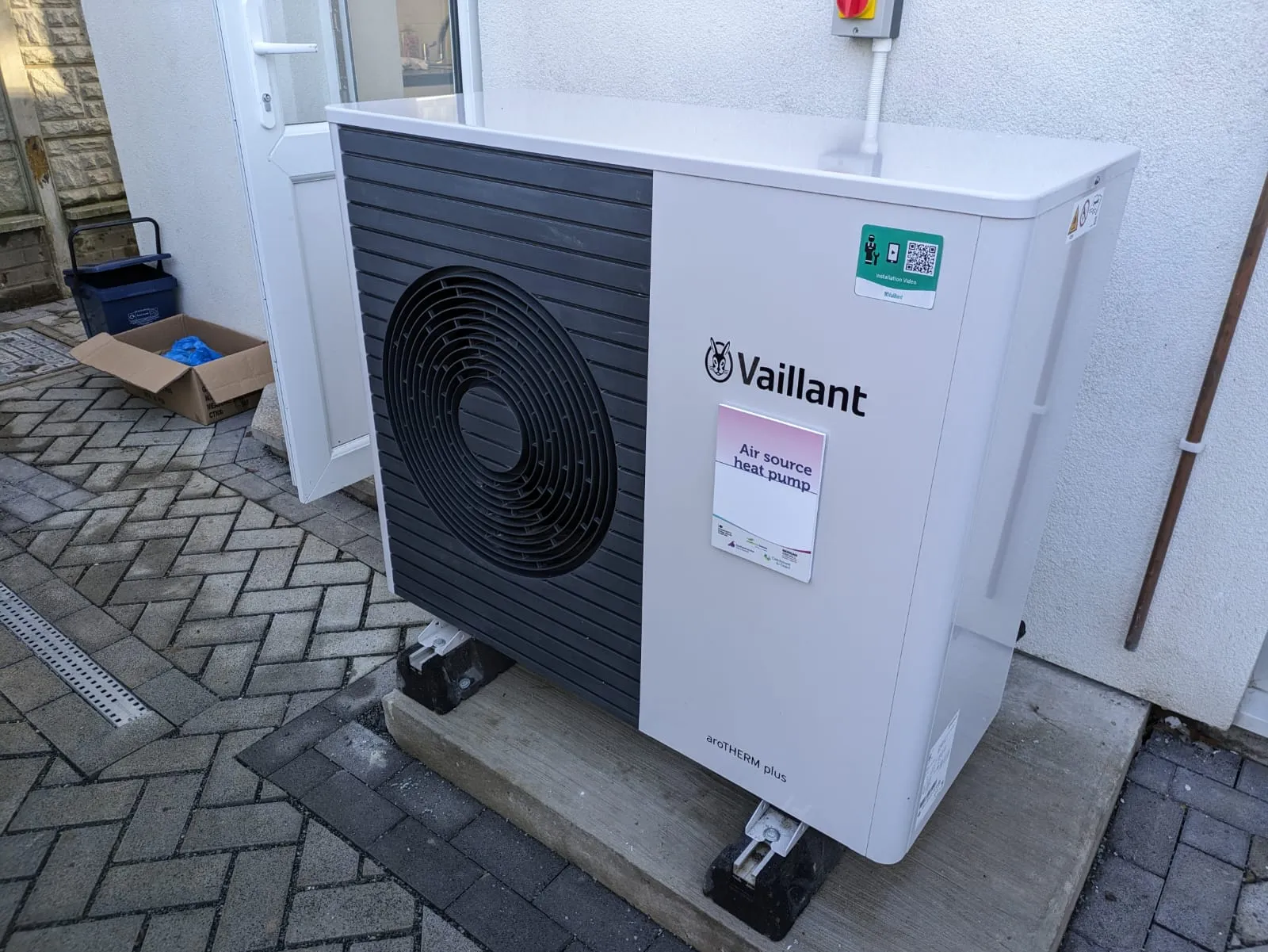
4am. The controller detects the ice and runs a defrost cycle. For a few minutes, the heat pump reverses to warm the coil. A puff of steam rises from the unit and meltwater drips underneath. Inside, nothing noticeable changes: the house holds its heat and the radiators stay warm.
6am. The heating steps up to bring rooms to daytime temperature. At −3°C, the heat pump is producing roughly 2.5 units of heat for each unit of electricity.
10am. The sun is out and the air is warming. Efficiency climbs back above 3.
The key point: the house stays warm throughout. A heat pump is designed to keep running in conditions like this.
Why dry cold is easier than damp cold
Ice builds fastest on the outdoor coil when the air is humid and close to freezing, roughly −2°C to +4°C with high humidity. In very dry, clear frosty weather, which Cambridge gets often, there’s less moisture to freeze, so defrost cycles are less frequent than you might expect for the number of frosty nights.
Efficiency across the temperature range
| Outside air | Typical heat out per unit of electricity |
|---|---|
| +10°C | 4–5 |
| +5°C | 3.3–4 |
| 0°C | 2.8–3.3 |
| −5°C | 2.3–2.8 |
| −10°C | about 2 |
Even on the coldest Cambridge nights, a heat pump is producing at least twice the heat of a direct electric heater for the same electricity. Over a whole Cambridge heating season, a well-designed system typically averages 3.0–3.5.
Getting through a cold snap
Most winters bring at least one spell of persistent frost, and every few years a proper cold snap with snow.
- Leave the heating on. Heat pumps recover slowly from a cold start. A steady temperature is more efficient and more comfortable.
- Check the outdoor unit is clear of snow and that meltwater can drain away. Ice on a path in front of the unit is a hint the drainage needs improving.
- Don’t panic about the steam. It’s normal during defrost.
- Hot water may take a little longer to reheat in very cold weather. A correctly sized cylinder allows for that.
A system sized for Cambridge’s design temperature shouldn’t need an electric backup heater, except possibly in the most extreme conditions.
Design is what makes the difference
Because Cambridge is frostier than average, the size of the heat pump and the radiators really matter. A system designed for low flow temperatures, with generous radiators, keeps efficiency up on cold days. Older gault-brick terraces benefit most from simple draught-proofing of sash windows and suspended floors before installation.
Myths
“Heat pumps don’t work below zero.” They do, and they’re standard across Scandinavia.
“I’ll need to keep my gas boiler as backup.” Not with a correctly sized system. Hybrid systems with a gas boiler aren’t eligible for the Boiler Upgrade Scheme.
“Defrosting means it’s broken.” It’s a normal part of operation.
See also: running costs through a Cambridge winter.
See what a heat pump would look like in your Cambridge home
The mechanism is the same in every UK home; the design is specific to yours. Our team carries out a free in-home survey including a full room-by-room heat-loss calculation, identifies the system size and configuration that fits your property, and provides a written quote with the £7,500 BUS grant already deducted.
You'll see the actual figure you'd pay — not an estimate — and the projected efficiency for your specific install.